Located in the 1st arrondissement of Paris, right next to the Tuileries gardens, the Musée du Louvre is one of the major main tourist attractions the city has to offer, welcoming nearly 10 million visitors yearly! A visit to the Louvre can be one of the most memorable things to do in Paris, but the size and scope of the museum can also be overwhelming.
Because of this, we don’t always recommend you visit; but if it’s a must-see for your trip to the city, then you’re in the right place to have the best possible time in the Louvre. In this practical guide, we’ll share how to best plan for your visit to the Louvre, with special advice from an official tour guide that you can book with yourself. Whether you’re visiting for the first or fifth time, bookmark this page so you can reference it when you’re planning your trip.


How To Plan A Visit To The Louvre
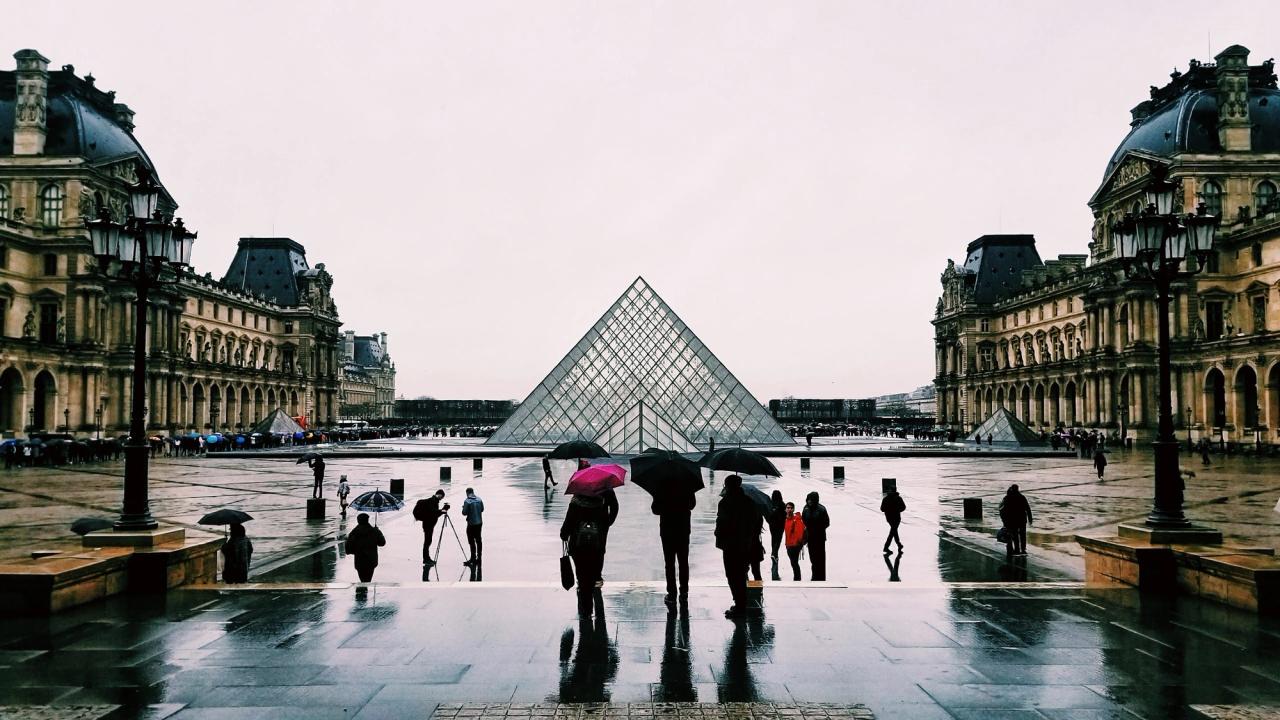
Choose a day that looks like it could be rainy (or other weather you might not want to be outside in)
It’s always easier to enjoy a museum when you’re not missing out on a picnic or a walk in the park!
Book your guide ahead of time
Tours, especially with private guides, can book out fast. You’ll want to organize yours ahead of time, and you’ll want to be with someone really great. Thankfully, we know someone. More on that below.
If you’re not going with a guide then book your tickets ahead of time
Avoid long waits and queues the day of by booking your tickets ahead of time. We can’t promise you won’t have to wait, but the process will be easier if you already have your tickets.
Plan on eating before, the Louvre takes energy!
Don’t arrive hungry, trust us on this. Grab breakfast at Café Kitsuné or lunch at Le Robe et le Palais before you head in. And if you need a coffee, make sure to have that first too (yes, there are toilets in the Louvre). Or maybe you’d rather have Ramen before you go? Or perhaps vegan street food? We have several recommendations within a 10-15 minute walk of the Louvre in our Guide to Paris. With Paris in My Pocket, you’ll have access to over 550 recommendations of places to eat, drink, and visit in Paris, as well as dozens of articles on preparing for your trip. And the great part? You get access for life, and we update it weekly!
If you plan on eating near the Louvre, check out our guide “Where To Eat Near The Louvre.”
Have a look at the various wings and exhibitions online before you come, that way you’ll know what to prioritize
Know what you want to visit before you get there, otherwise it can feel very overwhelming to decide on the fly.
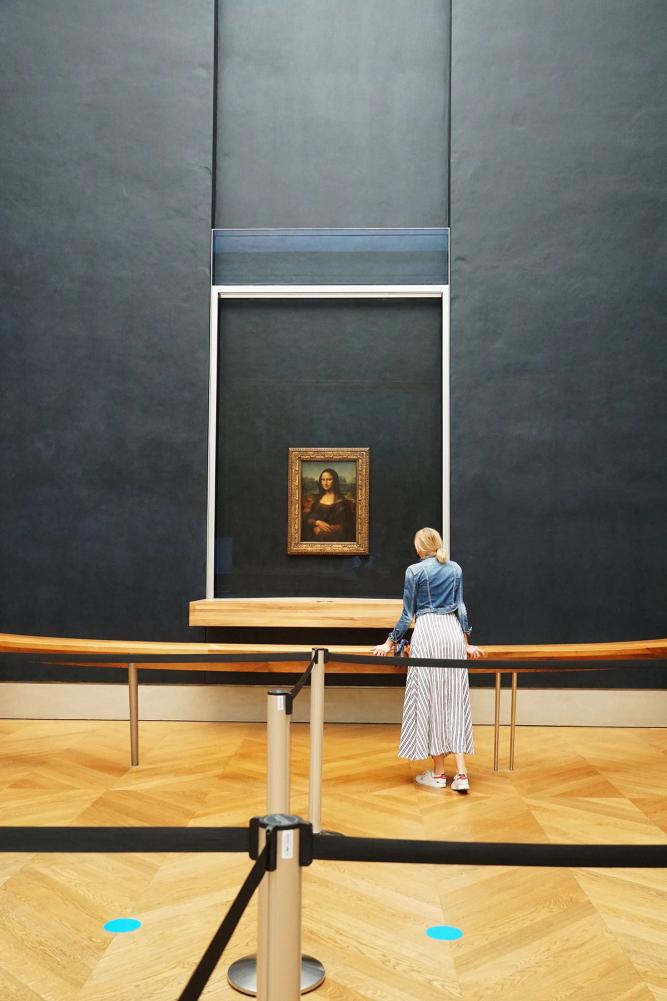
Be prepared that the Mona Lisa is very small and you’ll view her through a cloud of phones and cameras
…but the other wings of the Louvre are often much less crowded.
Show up on time or a bit early
Any tips for doing that here? Maybe use the ‘secret’ entrances by the Arch de Triomphe du Carousel?

When is the Louvre Open?
The Louvre is open from 9:00 AM to 6:00 PM on Monday, Thursday, Saturday, and Sunday.
It’s open from 9:00 AM to 9:00 PM on Wednesday and Friday.
The museum is closed on Tuesdays, as well as certain holidays such as: January 1st, May 1st, and December 25th

How To Get Tickets For The Louvre?
There are multiple ways you can secure your tickets for the Louvre.
- Book a tour with a guide, who will have your tickets for you: Our advice? Book directly with Amber, and do it before she fills up! You can contact her directly at [email protected] to find a time for your private tour of the Louvre.
- Book directly with the Louvre: You can do so here.
- Book with a third party website: We prefer getting Louvre entry tickets with third party vendors who are tried, true and trusted. We do this because trips can be unpredictable and where French customer service can be tricky, cancelling or moving your tickets through a third party can be smoother. With these guys, you get great customer service that’s reactive and accessible during your trip.
What’s the best time to see the Louvre?
Now you’re set with how to begin planning your trip, chances are you’ll have more specific questions about when and how to visit the Louvre. To answer these questions, we reached out to Louvre expert and guide, Amber Minogue. Amber is a certified guide conférèncière, meaning she’s qualified and allowed to give you a tour inside the museums of France. We’ve taken several tours with her, and recommend you do the same.
Amber's Advice
I'm often asked when the best time to visit the Louvre is, and what people usually mean is "when is it quiet?" The honest answer is that it never really is. Easter, Christmas and summer are the peak periods, and the Denon wing, home to the Mona Lisa, the Winged Victory of Samothrace and other superstars, stays busy from opening to closing.
There are still ways to make your visit calmer:
Late openings. Late evenings are marginally quieter, and the museum stays open until 9pm on Wednesdays and Fridays.
The 9am opening. The first few minutes after the doors open are calm, but not for long.
The afternoon. Queues are often much shorter after lunch.
Other departments. Away from the big names, the galleries are noticeably more peaceful.
Mondays. Monday is usually the busiest day, because many other Paris museums are closed. Monday morning is the one to avoid, as there can be disruptions and a late opening.
Tickets and entrances. Timed tickets are essential. In the morning, the Pyramid entrance is generally the best choice. You may hear influencers recommend the "secret" Carrousel entrance, but it often has the slowest queue, because it gives priority to groups. Do be sure to buy tickets from the official website.
Opening hours. The Louvre is open 9am to 6pm on Monday, Thursday, Saturday and Sunday, and 9am to 9pm on Wednesday and Friday. It's closed on Tuesdays, plus 1 January, 1 May and 25 December. Hours can change at short notice because of strikes, heat waves and holidays, so always check the official website before you go.
Gallery closures. The Louvre also closes different galleries on different days. If there's a particular collection you want to see, such as the Egyptian wing or Mesopotamia, check that it's open on your day. Mesopotamia is closed on Wednesdays, the Napoleon III Apartments on Thursdays and Egypt on Fridays. Rooms rotate for maintenance, so check the museum's website for your date.
Plan your visit around what else you want to do that day. If a specific collection matters most, let that choose your day.


How Much Time Do You Need To See The Louvre?
Here at Paris in My Pocket, we generally advise that you plan to spend a few hours to a maximum of half a day in the Louvre - that’s if you want to see the museum and enjoy art, but perhaps aren’t a fanatic, and want to do other things with your day. If you really hate art and museums, then skip it entirely. If you are an art lover, historian, or enthusiast, spend more time there, but just be aware that it can be tiring!
Amber's Advice
How Much Time Do You Need at the Louvre?!
How long is a piece of string? The Louvre is enormous and you can't see it all, so don't try. The right amount of time depends on your priorities:
1 hour: the "celebrities" and a few extras, and of course a selfie with Mona.
1.5–2 hours: a good overview of the main highlights.
A full day: for museum lovers, with lunch in the museum.
Be honest about what you’ll enjoy. Small children can only handle so much marble, and there’s no need to feel you must spend hours inside. Trying to see everything usually just leaves you rushed and tired.

What Are Must Sees At The Louvre?
Here’s another question best suited for Amber’s expertise than ours. Here at Paris in My Pocket, we do encourage you to lean away from the most famous sites, unless you’re absolutely aching to see them. For example, the Mona Lisa is beautiful but rather small and hard to see through a sea of phones. Instead, why not start in the Ancient Egyptian hall with Egyption antiquities? It’s quiet and there’s so much to see.
Amber's Advice
We all know the Mona Lisa is a must-see but on your way to see her you can check out some of the following:
1. The Wedding Feast at Cana, Veronese
Before you throw yourself into the crowd around the Mona Lisa, turn around. Directly opposite hangs the largest painting in the Louvre, Veronese's Wedding Feast at Cana (1563). It was painted for a monastery in Venice and taken by Napoleon's troops in 1797. It's serious and meditative in subject, but the canvas is full of colour, music and playful detail. See if you can spot the little dog and the parrot.
Location: Denon wing, first floor, in the same room as the Mona Lisa.
2. The Venus de Milo
Found on the Greek island of Milos in 1820, this marble goddess was carved around 150–125 BC. Her missing arms have fuelled two centuries of debate, and the mystery is part of her appeal.
Location: Sully wing, ground floor.
3. Liberty Leading the People, Delacroix
Painted in 1830 after the July Revolution, Delacroix's famous image shows Liberty, bare-breasted and holding the tricolour, leading a crowd over the barricades. It became a symbol of French republican ideals, and one of the most recognisable paintings in the world.
Location: Denon wing, first floor.
4. Psyche Revived by Cupid's Kiss, Canova
This is the work usually called "The Kiss." Antonio Canova's neoclassical marble (1787–93) It's all graceful curves, and well worth walking round to see it from every angle.
Location: Denon wing, ground floor, in the Italian sculpture galleries.


How To Get Around The Louvre?
- Plan your route ahead of time (maps are available online)
- Get a paper map when you arrive
- Don’t get distracted by wandering down other wings, or you’ll lose the time to see the things you want to prioritize
- Better yet, book a tour guide and you’ll never get lost.
Amber’s Advice
If you’d like a smooth, informative visit, there are a few ways to get more from your time:
- The Louvre’s official audio guide lets you explore at your own pace, with commentary on the major works.
- Guidebooks are sold in the museum bookshop, and you can pick one up on your way in or order one in advance.
- Better yet, private guide will take you straight to the highlights and tell you the stories behind them, so you spend your time looking at art rather than looking for it:
Visiting With a Guide
If you’re looking for a guide, it would be my pleasure to take you around. I lead private tours of the Louvre, and I love sending people home with a story or two to go with the big names. We can head straight for the highlights, or wander off toward the quieter galleries, whichever suits you best.
Because the tours are private, I can tailor them to your group. Families with children can have a shorter, more playful visit (there’s a lot of marble to get through, after all), and if there’s one collection you’re longing to see, we can build the visit around it.
If you’d like to know more, or just want a hand planning your day, you can find me at Paname Podcast.
Practical tips:
- The museum lends out prams, wheelchairs and folding seats at no charge.
- Bring a bottle of water, as there's very little air conditioning.
- Have a snack before you go in.


What Can You Bring Into The Louvre?
And for the last of our Paris travel tips for today, you can bring a water bottle, smaller bags, phones, and cameras into the Louvre. You can also check most of these things at the coat check, which we’d recommend to free you up a bit. As you might expect, you can’t bring big suitcases in with you, or dogs, alcohol, or food. If you’re looking for a place to store your suitcases, we recommend Radical Storage.
Hot tip
The Louvre is big, and it can be easy to get lost or get separated from your group, especially if you need to wander off to use the restroom, or you want to sit and sketch for a while. To stay connected to everyone in your party, we recommend getting an eSIM. As long as you contact your carrier to unblock your smartphone, you should be able to download an affordable eSIM for your time in Paris, allowing you to stay connected to your friends and family at all times. Oh, and with data, you always access the map in our guide to find the best food, drink, and coffee near you at any time during your trip.